Lawnmower parenting is a common approach where parents clear obstacles to protect their children from challenges. While meant to help, this style can hinder kids’ independence and coping skills, making it important for parents to find a balanced approach.
Lawnmower parenting is a growing trend among Australian families where parents remove obstacles to shield their children from challenges. While well-intentioned, this style can limit children’s coping skills and independence, leading to increased anxiety and low confidence. Understanding lawnmower parenting helps parents support healthy development without over-interfering. parenting advice. Raising Children Network.
It is a noble intention to protect children from suffering, failure, discomfort and difficulty. What is the outcome? The result? A new generation of children with fewer coping skills and reduced independence. They also struggle with increasing anxiety and low self-confidence.
This post will explore lawnmower parent, its differences from other parenting styles and, most importantly, why resisting our urge to interfere can be one of the best gifts we give our children.

What is lawnmower parenting?
Lawnmower Parenting is the term for parents who “mow” down any obstacle in their child’s path. Lawnmower parenting is a different approach to helicopter parenting, which hovers and micromanages. Instead, they take it one step further, proactively eliminating discomfort, conflict or failure for their child.
This could be:
- Calling the teacher and arguing for a low grade
- To ensure that homework is “done correctly”, it should be completed by the child.
- Refusing to allow a child to participate in rough and tumble play
- Stepping in to resolve social conflicts rather than letting the child handle them
- Avoid situations that may lead to frustration, disappointment or struggle
While the intent is to assist, it is often the opposite. The lawnmower parenting style may prevent children from developing the skills they need to be independent.
Why it’s so tempting to be a lawnmower parent
It’s a shame to admit it, but watching our kids struggle is painful. Our instinct as parents is always to fix the problem. Whether they’re upset that they weren’t selected for a soccer team, frustrated by a mean friend, or overwhelmed because of a difficult assignment, we want to help.
Children can learn valuable lessons from these moments.
KidSafe NSW, a child safety and development organisation, explains the following:
“Risky Play is very beneficial for childhood development.” Play and exploration that encourages mastery helps to boost a child’s confidence and well-being.
We may be short-circuiting growth if we intervene too early or too frequently.
Risky Play: We Ignore the Developmental Superpower.
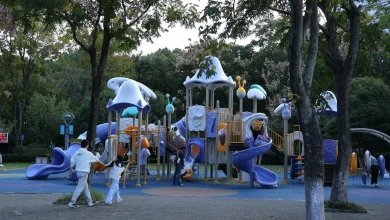
Modern parents are often uncomfortable when their children engage in “risky play”. We think of smashed knees, bumped heads, and emotional meltdowns. This kind of self-directed, unstructured play is essential for the development of physical coordination, emotional regulation and resilience.
Vicci Oliver is the founder of Wildlings Forest School, a Queensland-based school.
Children who learn to manage risks in a developmentally appropriate way are more likely to have the ability to control their emotions around fear and anger.
Wildlings Forest School is one of the many nature-based educational environments in Australia. Children are encouraged to:
- Climbing trees
- Build cubbies
- Discover natural spaces
- Play imaginatively and freely
Guess what? Not only survive, but they also thrive.

Oliver says that when children take charge of their play through risk-taking and decision-making, and by solving problems, they learn a range of skills which will guide them in making decisions about boundaries, limits and their personal safety for the rest of their lives.
The Academic Case Against Lawnmower Parenting
Overprotective parenting can impact academic performance.
In an ABC article, Dr Kathleen Bagot discusses the benefits of outside play and autonomy within school settings. Her research found that children who participated in unstructured, risky outdoor play showed a 5- 10% improvement in their academic performance.
“What we see is that children are engaging in their play area in a very natural way without adult direction and in an unstructured space,” explains Dr Bagot.
Children who are permitted to:
- Solve problems on your own
- Experience the consequences
- Take decisions without constant adult input
You are better prepared to tackle academic challenges. Why? Real learning is only possible through struggle. Insight comes from mistakes. Frustration fuels persistence. Children may be lacking in resilience if they do not have these experiences.
The Long-Term Impact of Mental Health and Fitness
The effects of lawnmower parenthood extend beyond the childhood years.
Experts are raising the alarm about the Mental Health Crisis in children and teenagers — and point to overprotection as a major contributing factor. children’s health. Beyond Blue.
- Anxiety and depression in children who have never faced manageable risks: Many children fear failure or uncertainty.
- Reduced gross-motor development.When children’s coordination, strength and confidence in themselves decline when they are not allowed to play physically and actively.
- Lack of emotional regulation and poor problem-solving skills: These vital skills are underdeveloped without real-world experience.
It may seem like the ideal to have a “perfectly curated” childhood, but it can deprive children of the experiences that they need to develop competence and confidence.
What we should be doing instead: promoting resilience
What’s the alternative to this? What’s the alternative?
According to Dr Justin Coulson, a parenting expert and founder of the Happy Families Platform:
The key to increasing your child’s resilience is creating a relationship with them.
When a child is truly heard, seen and loved, they feel safe exploring, failing, and trying again. This safety net does not have to be an elaborate rescue operation; it can simply be a presence that says I believe in you.
Dr Coulson suggests
- Turn off the phone to give your child all of your attention
- Give more physical affection and cuddles
- Let children make their own decisions and let them learn from it
- Keep calm and composed during emotional meltdowns as a model for emotional regulation
- Prioritise unstructured times and nothing together

Final Thoughts
The love that goes into lawnmower parenting is contagious. We want to see our children succeed, be safe and avoid pain. But growth doesn’t happen in comfort zones.
We also remove the opportunities that our children need to grow when we clear all obstacles.
- Resilience
- Self-belief
- Courage
- Independence
Your child’s scraped knee could save them from a total breakdown when they fail their first university exam. In primary school, a difficult friendship situation could prepare your child to handle more complex relationships in the future.
We want to raise children who are able to handle challenges, not those who avoid them. They bounce back after falling. They know their value is not in perfection but in perseverance. For more information, visit Red Nose Australia.
Stop mowing the bumps and let our children walk to help them learn. baby care. For more information, visit Healthdirect Australia.